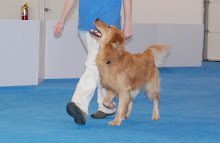
Many times people are told the advice to "ignore the dog" when he jumps up and then to "reward with attention" when he's on the floor or sitting.
This isn't bad advice. It's better than spraying the dog or yelling at him or stepping on him. But it's also not so great. It can take a long time, it can be unsafe for the person, and it can create frustration and anxiety, both of which make the situation more dangerous or the behavior more intense.
 For all dogs who jump up, our plan has three parts.
Management: We list all the times the dog is likely to jump up. We want to know these so that we can train appropriately (If your dog only jumps on visitors, we'll soon need to find other people to help with training.) and we need to know how to prevent the dog from practicing the behavior throughout the training process. Sometimes this means tossing a hand full of treats on the floor before entering the house or keeping the dog crated with a great chew toy when visitors come over. Crates, gates, and doors to give the dog fewer opportunities. Leash the dog and have him settling while visitors are over. Stay far enough away from other people that he does not jump up.
Training: As I've mentioned before, we do a lot of training exercises to teach the dog to greet people. The dog learns to sit for other people. The dog learns to be attentive to his owner rather than the visitors, and the dog learns more self control.
If it goes wrong: and the dog jumps up, we respond appropriately. If it's a frail person or someone with your birthday cake....okay, yes, pull your dog off... but other than those situations, just wait. Gravity will win. The dog will return to the ground on his own. If we find we're employing this plan more than once or twice a week, we may need to re-evaluate our plan and improve our management or training. "Ignoring" the behavior is not the crucial piece of the training plan, it's our backup plan.
For dogs who are very frantic or who are not making a lot of progress, sometimes there is a lot of anxiety that needs to be addressed before we come back to the training for polite greetings. The jumping really isn't the problem at hand, and if we don't address the anxiety, the behavior will continue with minimal progress.